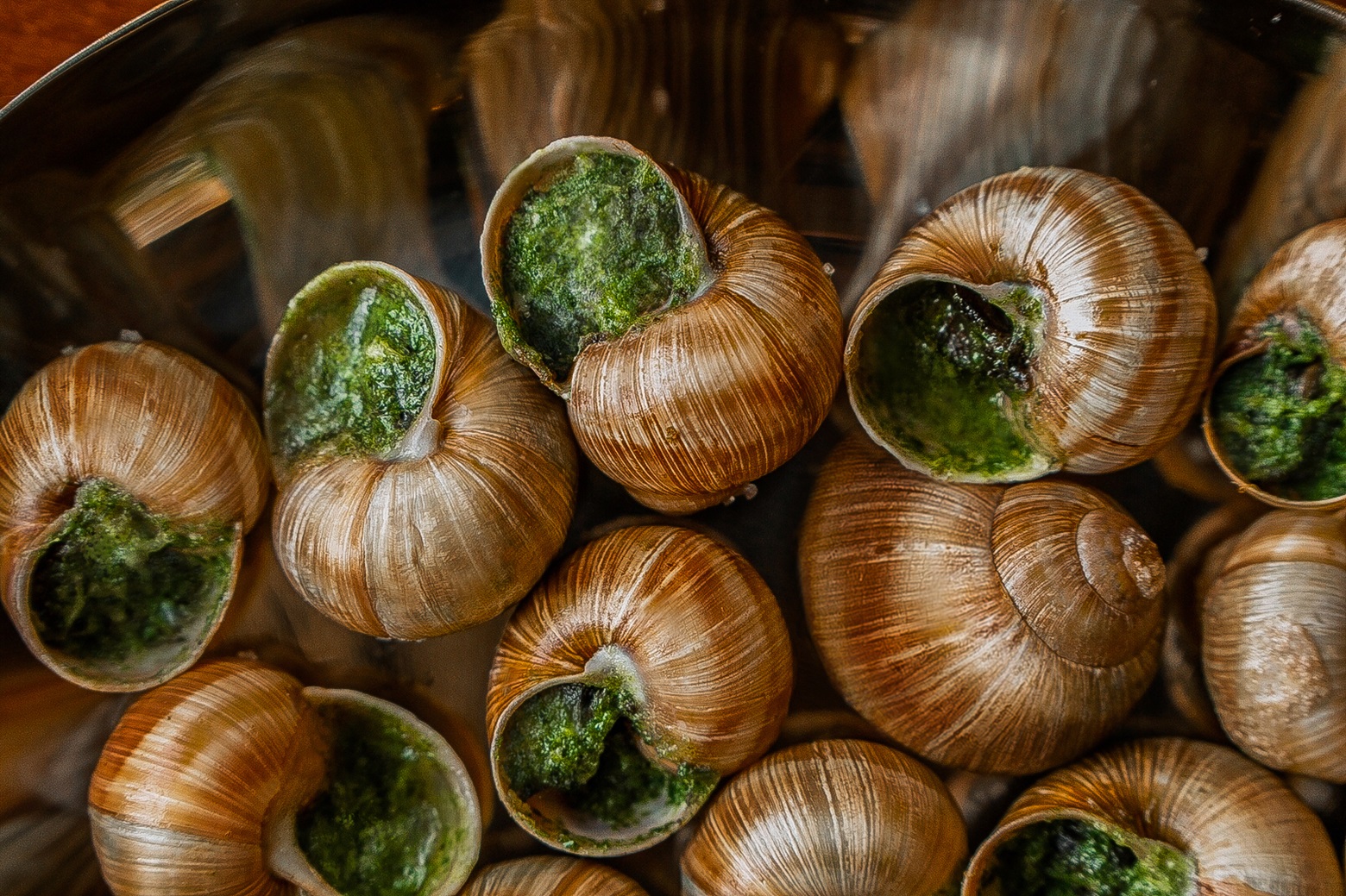
Escargot is a French term for edible terrestrial snails, which are a popular delicacy, typically served as an appetizer. The most classic preparation, known as Escargots à la Bourguignonne (Burgundy style), involves cooking the snails with a rich mixture of butter, garlic, and herbs (especially parsley).
Definition:
In English, “escargot” refers specifically to prepared, edible land snails as a dish, while in French, the word simply means “snail.”
Species:
Not all snails are edible. The most commonly used species for the classic dish are the Roman snail (Helix pomatia, or Burgundy snail) and the common garden snail (Cornu aspersum, or petit-gris in France).
Preparation:
Snails must be properly purged (cleansed) and cooked before consumption to ensure they are safe to eat. They are typically removed from their shells, cooked in a seasoned broth, and then placed back into the shells before being stuffed with garlic butter and baked until sizzling hot.
Serving:
Escargots are usually served hot in specialized plates with indentations to hold the shells upright. Special tongs (pince à escargot) are used to hold the shell, and a small two-pronged fork (fourchette à escargot) is used to extract the meat. They are often accompanied by fresh, crusty baguette to soak up the garlic butter sauce.
Taste and Texture:
The natural flavor of the snail meat is often described as subtle, similar to a slightly salty mushroom. The dish’s appeal largely comes from the rich, flavorful garlic butter sauce.
Global Consumption:
While a French classic, consuming snails has a long history dating back to prehistoric times and remains popular in other cultures worldwide, including Spain, Portugal, Greece, and parts of Africa and Southeast Asia, where they are often prepared in various regional styles such as stews or curries.